
Summary:
- Location: Orlando, Florida (Orange County)
- The Problem: A single-story, concrete slab-on-grade home built in 1972 experienced severe foundation settlement driven by soil erosion into a nearby Little Econlockhatchee River tributary and decomposing organic matter in the soil bed. Symptoms included numerous interior wall and ceiling cracks, structural cracks, and exterior stair-step cracking along the perimeter concrete block walls.
- The Solution: After securing engineered plans and municipal permits, Florida Ram Jack reinforced and supported the foundation by installing fifteen (15) proprietary 3-inch helical piles across three strategic settlement zones along the garage and exterior walls.
Foundation settlement is a prevalent challenge for property owners throughout Central Florida, where unique water features and subterranean soil profiles constantly threaten structural integrity. In neighborhoods bordering local waterways, such as the Little Econlockhatchee River tributaries in Orlando, dynamic environmental factors can rapidly compromise concrete slab-on-grade foundations.
Recently, Florida Ram Jack engineered a structural remediation plan for a 1972 single-story home in the Orlando area displaying severe structural distress. Following a meticulous physical evaluation, our team identified localized foundation sinking caused by compromised underlying soils. By deploying deep-driven helical piles, we successfully transferred the building’s structural load to stable load-bearing strata, reinforcing the home against future shifting.
How Does Soil Erosion Near Waterways Cause Structural Cracks and Slab Foundation Settlement?
Slab-on-grade foundations rely entirely on the top few feet of soil to remain level; when nearby water channels erode that soil or sub-surface organic materials rot, an empty pocket forms beneath the concrete. Without uniform support from the earth below, the heavy concrete slab cracks and sinks under its own weight.
For this Orlando property, proximity to a Little Econlockhatchee tributary created long-term drainage and soil migration issues. Over decades, constant water movement washed away fine sub-surface particles. Compounding the issue, the presence of buried decomposing organic matter within the soil bed caused the ground to shrink and compress, leaving the 1972 concrete slab without a stable base.
What Warning Signs Indicate Concrete Block Perimeter Foundation Failure?
The most definitive warning signs of perimeter foundation failure on a concrete block home include exterior stair-step cracking along mortar joints, separation between block columns, splitting interior drywall, and misaligned window or door headers. Attempting a cosmetic fix by applying fresh mortar over these gaps will not stop the underlying structural movement and often masks a worsening problem.
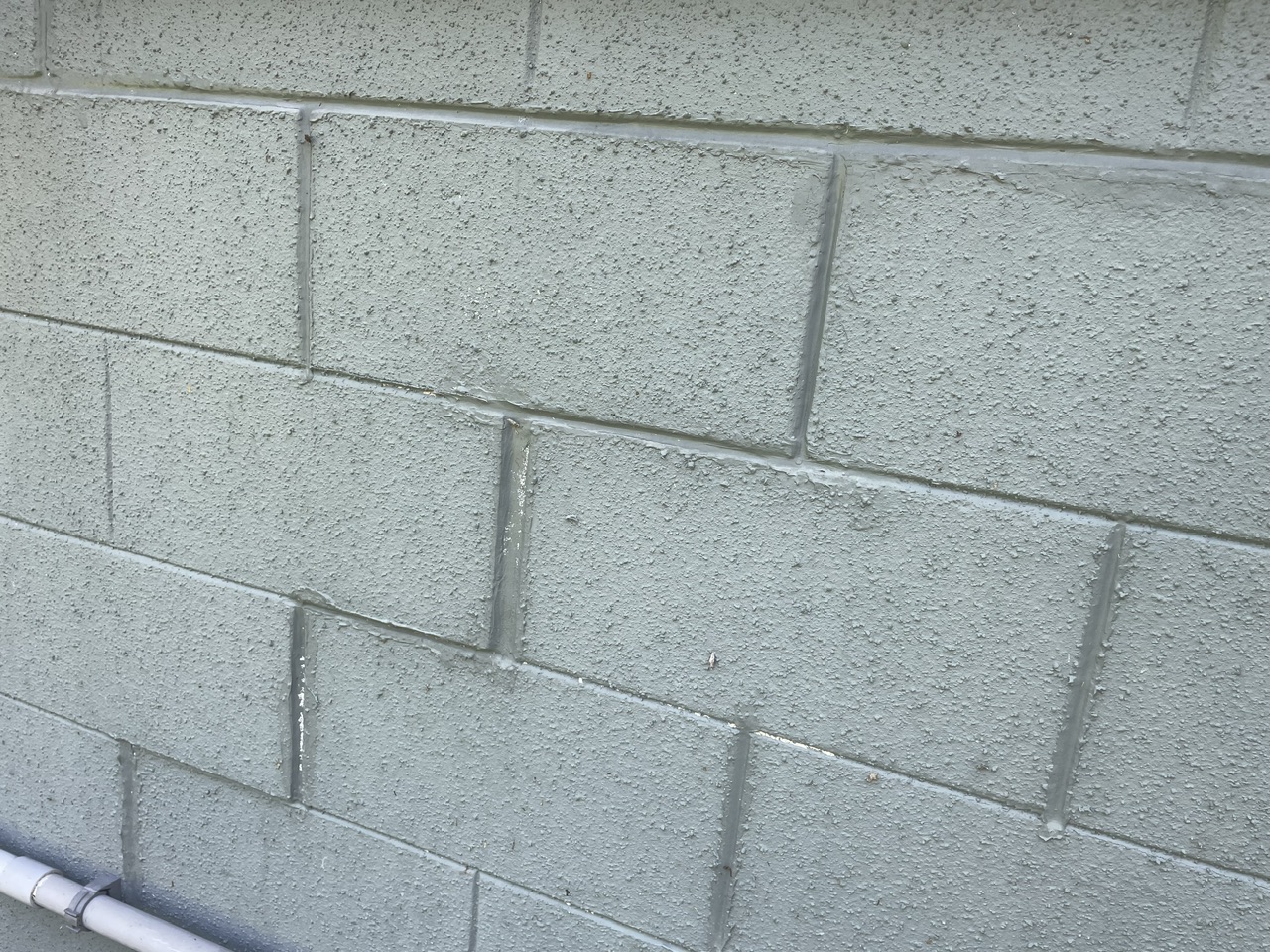
On this project, the structural movement manifested visually on both sides of the perimeter walls. Inside, the homeowner faced escalating drywall cracks radiating from stress points. Externally, the concrete block walls exhibited classic stair-step cracking—a clear signal that the underlying perimeter footing was breaking apart and dropping due to the localized soil failure.
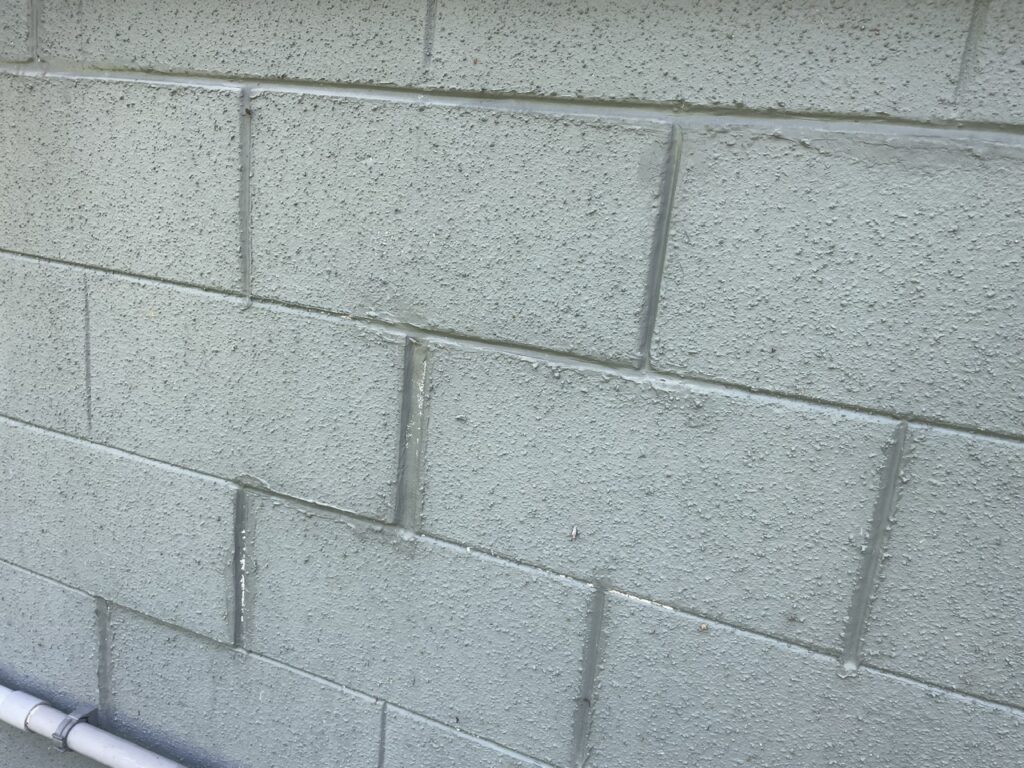
The homeowners tried to fill in the block gaps with mortar; this cosmetic fix did not address the foundation issues.
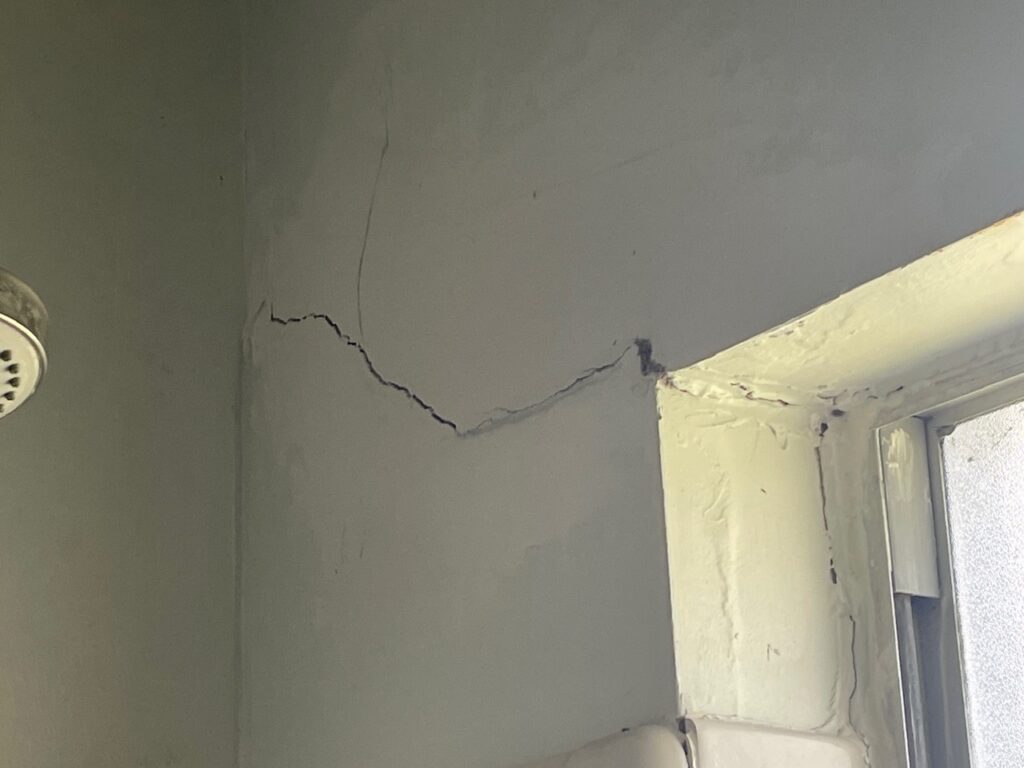
Visible diagonal cracking is seen at the corners of windows and along the middle of ceilings in the home.
Why Must Foundation Repair Involve Permits and Engineering Letters?
Foundation repair requires formal building permits and signed engineering letters to legally certify that the proposed remediation plan safely accounts for local soil mechanics and structural building codes. This prevents unengineered, temporary cosmetic fixes that fail to address root mechanical issues.
Because the perimeter concrete block walls had lost structural integrity, Florida Ram Jack coordinated directly with certified structural engineers to design a targeted piling layout. Once structural calculations were stamped and approved, we secured the necessary Orange County building permits. This rigorous process guarantees the homeowner that the adjustments made to their primary asset are verified, legally compliant, and structurally sound.
What Specific Helical Pile Solution Was Deployed?
The customized engineering plan required the strategic installation of fifteen (15) Ram Jack proprietary 3-inch helical piles divided across three distinct structural distress zones around the home’s perimeter.
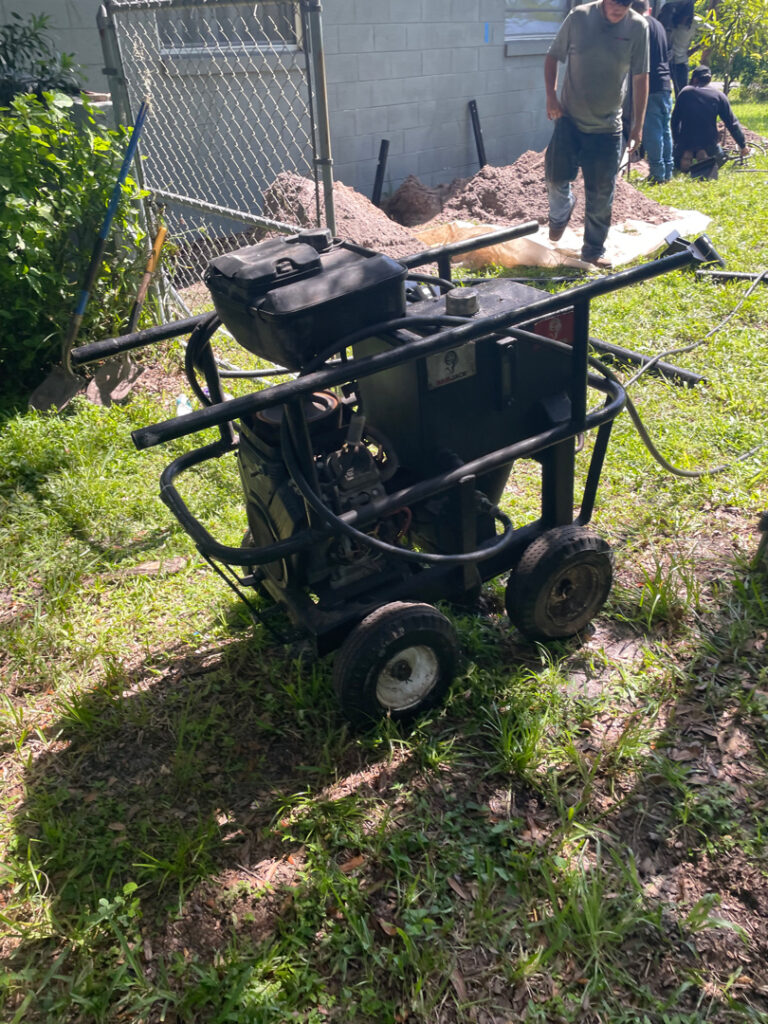
Our crews excavated access points down to the footings and mechanically drove the heavy-duty piles to strict hydraulic torque specifications. The installation was distributed as follows:
- Northeast Wall: Nine (9) 3-inch helical piles to support the primary zone of riverbed erosion.
- Southwest Wall (South End): Four (4) 3-inch helical piles to anchor the settling residential perimeter corner.
- Southwest Wall (West End / Garage): Two (2) 3-inch helical piles to secure the shifting garage foundation structure.
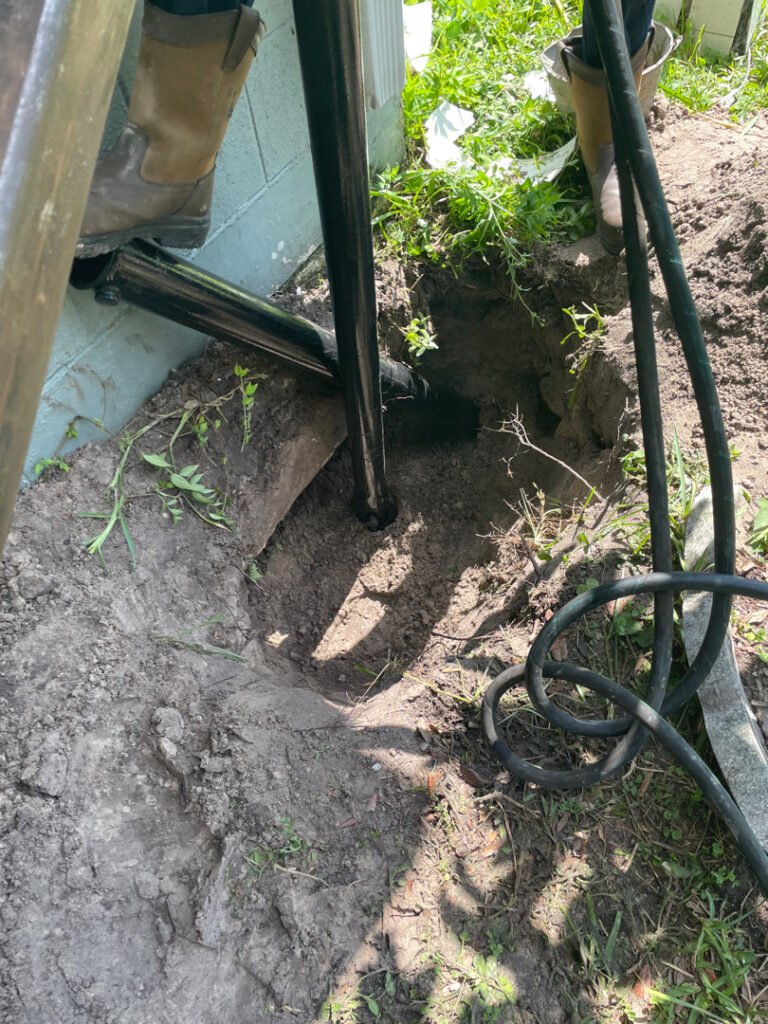
Why Are 3-Inch Helical Piles Chosen for Slab-on-Grade Remediation?
Three-inch helical piles are selected because their high-tensile steel shaft and helical plates allow them to be screwed deep into the earth, bypassing organic muck and eroded topsoil entirely without requiring massive, destructive excavation.
By monitoring installation torque continuously throughout the drive, our technicians gather real-time data verifying that the pile has reached competent, dense soil capable of supporting the structure. Once depth and torque metrics are achieved, high-strength steel brackets are locked underneath the existing concrete footing, providing a long-term, durable support grid that shields the home from seasonal soil changes.
Why Should Orlando Homeowners Address Waterway-Adjacent Settlement Quickly?
Orlando homeowners should address waterway-adjacent foundation issues immediately because subterranean erosion and organic decay accelerate over time, causing small cracks to evolve into catastrophic structural failures.
As soil continues to wash away into nearby tributaries, the unsupported spans of the concrete slab grow larger, eventually leading to broken plumbing lines, displaced roof trusses, and major structural liabilities. Taking action at the first sign of stair-step or interior wall cracking allows for a targeted, highly effective deep-foundation intervention before the home suffers irreversible framing damage.
Need Foundation Repair in Orlando or Orange County?
Florida Ram Jack engineered systems protect residential and commercial properties throughout Orlando, Kissimmee, Sanford, and surrounding Central Florida communities. Whether your property is suffering from organic soil decay, tributary erosion, or concrete slab cracking, our team delivers verified, permitted, and engineered support systems.
Contact Florida Ram Jack today to schedule your professional foundation inspection and secure your property for the long term.
Frequently Asked Questions
Yes. Moving water lines naturally draw fine soil away from nearby properties via subterranean erosion, creating voids beneath concrete foundations that trigger settlement.
Stair-step cracks follow the weakest paths in a concrete block wall—the mortar joints. They almost always indicate that the concrete footing beneath that specific section of the wall is sinking.
Decomposing organic matter consists of buried ancient plant material, roots, or muck layers. Over time, this material rots and compresses, leaving structural voids that cause the overlying house foundations to settle.
No. Helical pile installation is low-impact. Small hand-dug or mini-excavator access pits are made directly against the foundation footing, preserving the majority of your landscaping.